UPS capacity (protected load)
AI training loads step harder than anything a 2014 UPS was specified for.
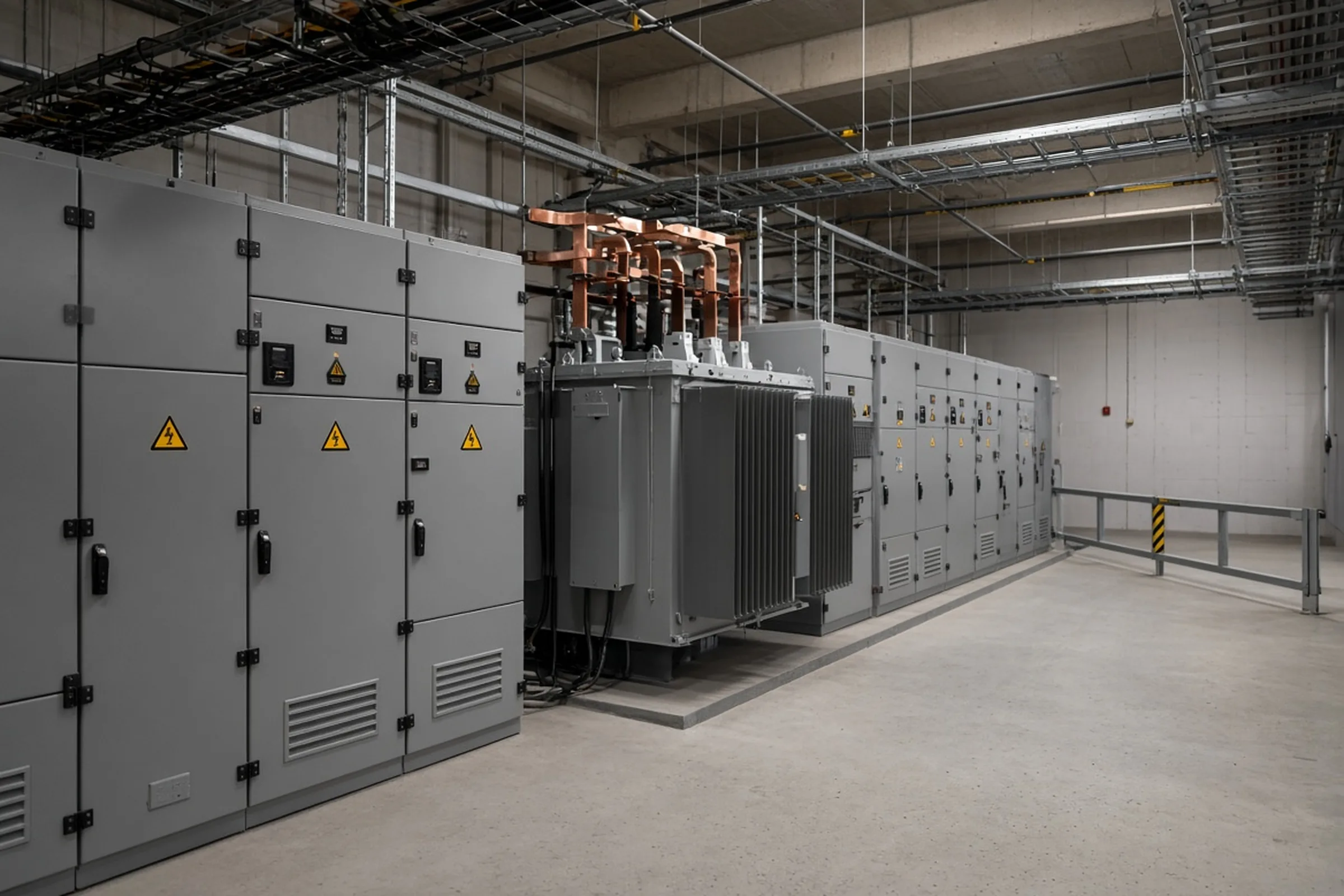
What runs out
Protected capacity available for new IT load, and the instantaneous step the installed blocks will accept without transferring to bypass.
The relation that governs it
Headroom = installed protected capacity × redundancy factor − existing protected load. Separately, a synchronised training job can present a step of a large fraction of its own rating in milliseconds.
How to tell whether it binds in your hall
Compare protected headroom against the new IT load. Then ask a second question most people skip: what step load are the installed blocks rated for, and what step will a synchronised job actually present?
What relieves it
Additional modules where the installed system parallels, or a new block with its own switchgear where it does not.
What that relief costs beyond money
Mixed-vintage parallel operation is a common and expensive surprise. Whether new modules will parallel with the installed system is a question to settle before it is priced, not after.
Indicative relief lead time
20–52 weeks
European retrofits. The schedule, not the capex, usually decides.
How we currently price this relief
E0
A placeholder with a −50%/+100% band, not a price. It is replaced by a quotation the first time we tender this relief on a real project.
The mistake we actually see
Capacity is checked and step-load capability is not. The second is what causes the incident.
Basis
- — Site UPS schedules; manufacturer step-load ratings.
These usually travel together
Does this one bind in your hall?
Seven numbers you already know, all thirteen constraints evaluated, and the one that stops you first named with its basis in engineering units. Free.