Cooling architecture per-rack capability
Air-cooled halls stop somewhere between 20 and 40 kW a rack, and no amount of plant changes that.
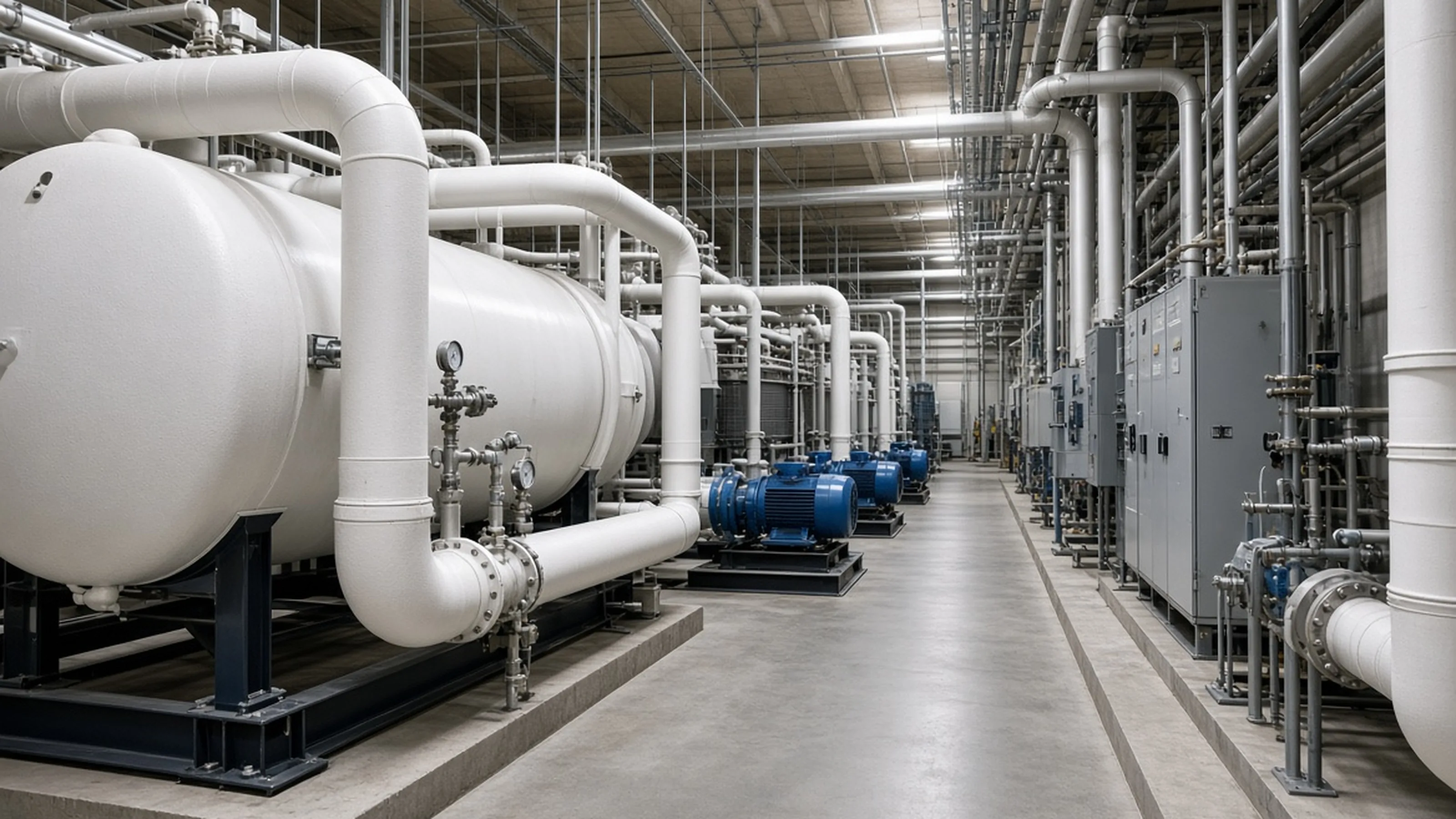
What runs out
The maximum per-rack power the chosen cooling architecture can support at all, before any question of capacity.
The relation that governs it
A gate rather than a capacity: retained air, rear-door, hybrid DLC and full DLC each have a per-rack ceiling. Exceeding it is not a shortfall, it is an architecture that does not apply.
How to tell whether it binds in your hall
If your target rack power is above roughly 40 kW and the hall is air cooled with containment, this gate closes before any capacity constraint is reached. The honest answer at that point is an architecture change, not more plant.
What relieves it
Change the architecture: rear-door, hybrid direct liquid cooling, or full DLC with a high-temperature loop.
What that relief costs beyond money
Each step up is a larger programme and a different skill set in the hall. The decision is rarely reversible within a tenancy.
Indicative relief lead time
12–36 weeks
European retrofits. The schedule, not the capex, usually decides.
The mistake we actually see
Believing a hall can be pushed to 100 kW+ a rack with better airflow. Fewer than 4% of facilities can host 100 kW racks today.
Basis
- — Uptime Institute Global Survey 2025/26: 82% of operators' densest rack is below 30 kW; practical retrofit ceiling 20–40 kW.
These usually travel together
Does this one bind in your hall?
Seven numbers you already know, all thirteen constraints evaluated, and the one that stops you first named with its basis in engineering units. Free.