Chilled-water plant capacity
Direct liquid cooling does not remove the air load — it shrinks it, and the remainder still needs the plant you already have.
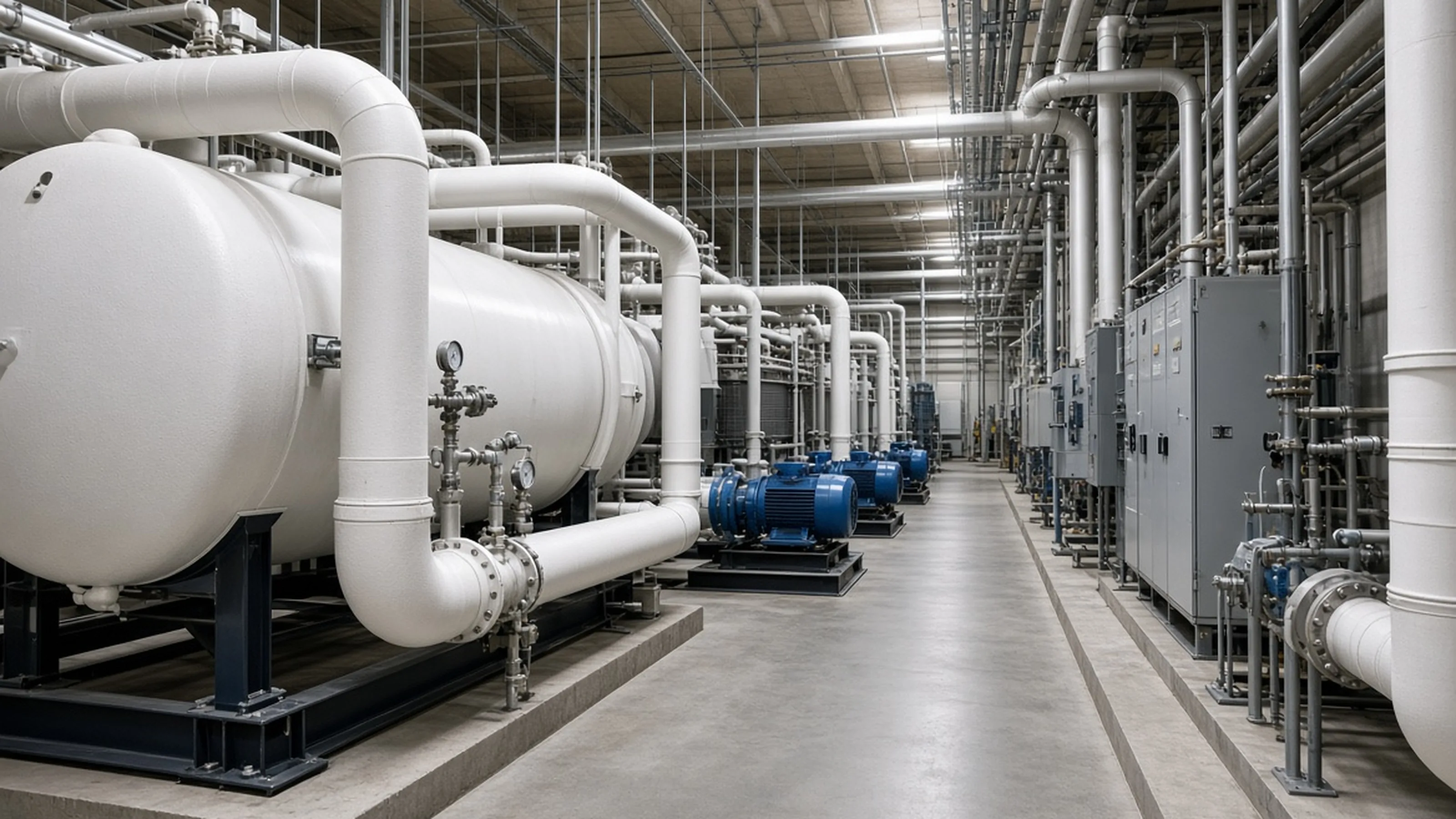
What runs out
Chilled-water capacity available for the residual air load that liquid cooling does not capture.
The relation that governs it
Residual air load per rack = rack kW × (1 − liquid capture fraction). At a 0.85 capture fraction a 132 kW rack still rejects about 20 kW to air — more than a whole rack in the hall's original design.
Worked example
How much air load remains after direct liquid cooling?
135 kW × (1 − 0.90)
13 kW per rack, still to air
More than two racks' worth in a hall designed for 8 kW.
Reproducible by hand. A page that asks you to trust a number has taught you nothing.
How to tell whether it binds in your hall
Multiply your target rack count by rack power by (1 − capture fraction) and compare against plant headroom at your site's summer design dry bulb, not at a standard rating condition.
What relieves it
Additional plant, adiabatic assist, or a trim chiller on a high-temperature loop. Raising the loop temperature is often worth more than raising duty.
What that relief costs beyond money
Retaining low-temperature plant for the residual air load forgoes most of the free-cooling benefit the liquid loop was supposed to deliver.
Indicative relief lead time
24–60 weeks
European retrofits. The schedule, not the capex, usually decides.
How we currently price this relief
E0
A placeholder with a −50%/+100% band, not a price. It is replaced by a quotation the first time we tender this relief on a real project.
The mistake we actually see
"We are going liquid, so cooling is solved." The residual air load of a dense hall frequently exceeds the hall's entire original design load.
Basis
- — Platform liquid capture fractions from published vendor architectures, corroborated where possible.
These usually travel together
Does this one bind in your hall?
Seven numbers you already know, all thirteen constraints evaluated, and the one that stops you first named with its basis in engineering units. Free.